A critique is not a matter of saying that things are not right as they are. It is a matter of pointing out what kinds of assumptions, what kinds of familiar, unchallenged, unconsidered modes of thought, the practices that we accept rest on.
And the proverbial expression, "A cat maie looke on a kyng", is the only right I have to do this.
Michel Foucault in Practicing criticism, or, is it really important to think?, an interview by Didier Eribon, 1981, in Politics, Philosophy, Culture, ed. L. Kriztman, 1988, p. 155.
The clearer our PERCEPTION and wider its scope, the better our senses and judgements align with our actual EXPERIENCE. Beliefs and dreams change what reality becomes to the extent they inform our actions, but action, and inaction, initiate a cascade of reactions, making it possible only to predict their outcome approximately. As parts of a whole then, our ability to "effectively chart our own paths" is inescapably constrained.
Newton's Law, as often quoted, states that, For every action there is an equal and opposite reaction. That reaction in an ideal space, is then an action in another such space, and actuality the coextensive set of an infinite number of such spaces.
At least up until 2015, billionaire Richard Branson's thoughts on Mark Twain's words were widely reported, for instance by Quote Investigator
As at 14 February 2026, this quote, from Branson's post, My three favorite quotes on imagination, dated 13 October 2014, was recorded here; however, the references provided, as well as those on Quote Investigator and elsewhere, only redirected to his blog on the Virgin website, where no further information was available.
footnotes of n_Einstein_Translation.php included in entryNote.php, e_Einstein_HumanDelusion.php, and e_personalMeta.php.
Einstein wrote the above (bold emphasis added), in ink, in a note now held in the Albert Einstein Archives, Jerusalem. The edit I have made is of the translation, written in another hand, that appears underneath them.
There were several reasons for editing that translation — to reflect the gender neutrality of the German more consistently; to echo Einstein's use of the words, delusion, and, illusion; and to better reflect the certitude of the note's opening argument, carried in the brevity of the German yet somehow absent in the translation on the note itself. In the end, the edit below, supported by translations by Google on 6 March 2024, is only a minor edit of it:
The translation, in pencil on the original note, became the text of the condolence letter sent from Einstein to Dr. Marcus on 12 February 1950. The first two sentences of it were then used to open the letter of condolence sent on the 4 March 1950 to Norman Salt.
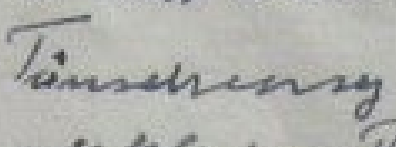
Einstein spoke the refined German of the Bildungsbürgertum, a language characterized by its precision. It might the be reasonable to assume, as an inspection of Einstein's note also suggests, that his use of the word Täuschung (delusion) twice and Illusion once, was considered not careless.
Etymologically the word delusion implies an action, a deceiving, referring here to that suffered by human beings through our consciousness, through which we perceive a deceptive appearance, the illusion of being "separated from the rest".
Although I believe that translations I have found are faithful to the originals, stripped of their context, quotations can lose much of their quality. Transliteration of punctuation, for instance, can result in an English that makes their authors sound coarse or uneducated; and 'grammatical transliterations' may substitute gender bias for the gender neutrality in an original.
Where I have edited translations it has been only in order to address issues of punctuation, prosody, and inference, that I found detracted from the content of the originals. The edits have been made with due diligence, and although I am not a professional translator or writer, I believe they are faithful, and required to make the fluency, erudition, and sensibility of the originals explicit — original texts are provided so readers may draw their own conclusions.
Footnote {delusion01a} of n_Einstein_Translation.php.